
Marcel Design System
A global design system that gained a regional theme layer to work in Brazil.
The Problem
While working on Carrefour's global design system, I started to notice a frustrating pattern repeating among the group's brands in Brazil: visual inconsistency between countries and, worse, real resistance from designers and developers in adopting the DS itself. No one had asked me to look into this — it was an insight I had on my own, observing how local teams created parallel solutions because the global structure simply couldn't handle the particularities here.
Why the Global System Wasn't Enough
Brazil had two cases that clearly exposed this limitation. Atacadão needed design system coverage but lacked a dedicated team — and without agility and resource savings, every new screen turned into an effort from scratch. Sam's Club was even more peculiar: outside of Brazil, the brand belongs to Walmart, not Carrefour. In other words, by definition, it would never be included in Marcel's global structure — but in Brazil, it was a brand of the group that also needed visual consistency.
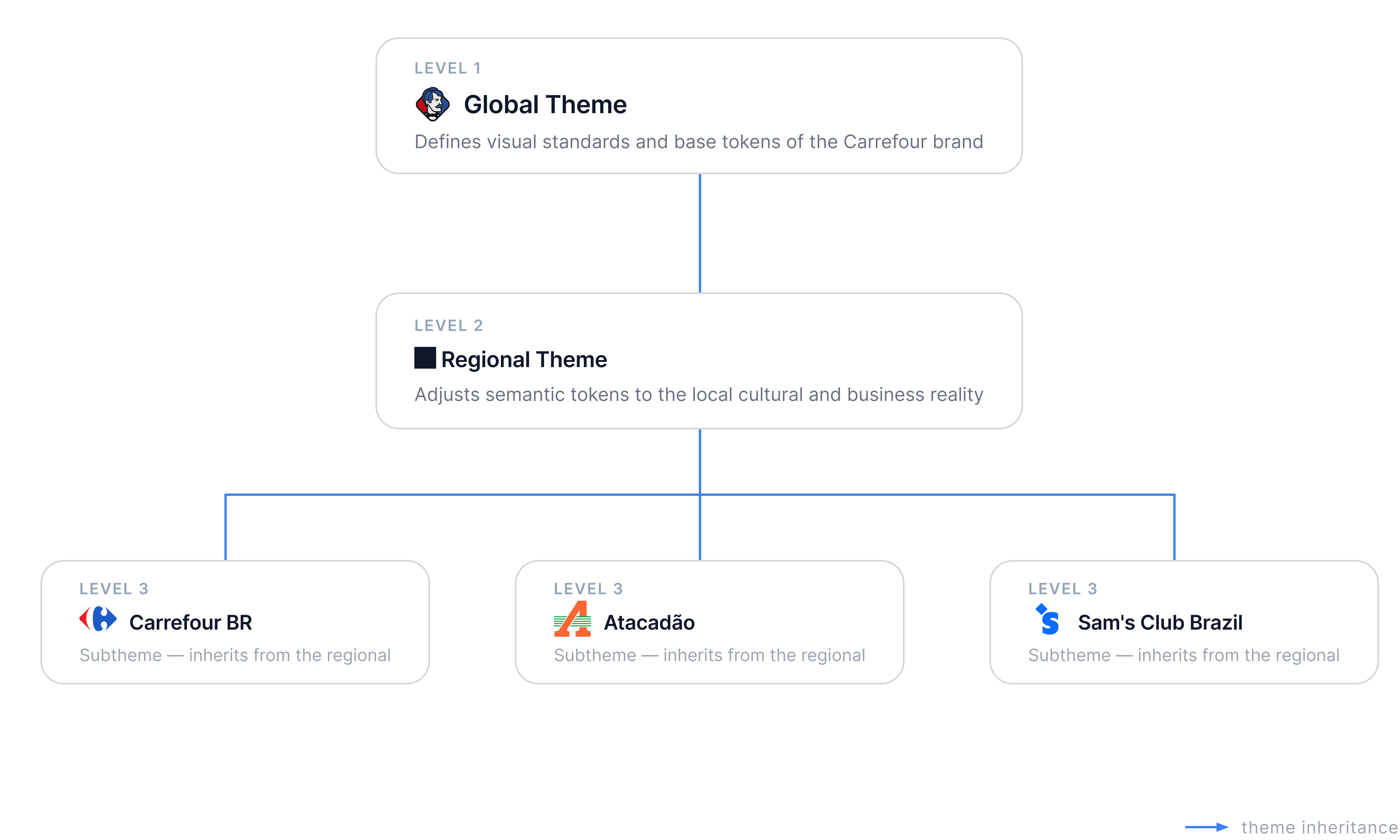
Faced with this, I proposed a local theme layer: a structure that could inherit from the global Marcel, but allow specific tokens and components of each Brazilian brand to be handled without depending on a global decision — without, however, ceasing to be part of the design system ecosystem.
The Path Was Not Straightforward
Convincing the global team to decouple tokens for a per-country layer was not a quick conversation. It took about six months of meetings explaining the reasoning behind this need until the decision was actually incorporated and I could build the Brazilian scenario.
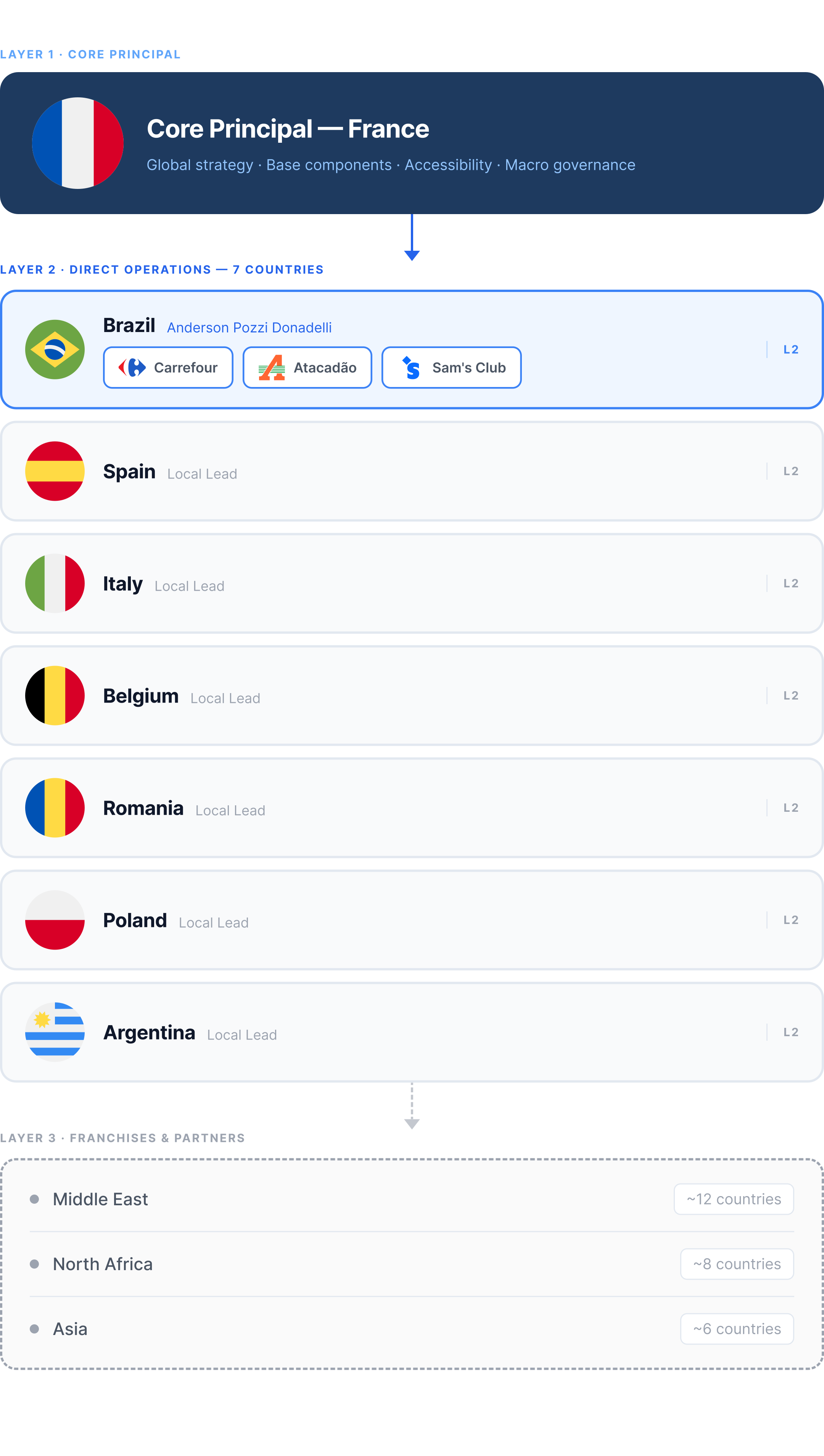
Even after that, not everything went as planned. Adapting Sam's Club's visual language to the Marcel structure required more ongoing maintenance than any other brand — the local components of this layer ended up consuming a disproportionate share of the team's time. It wasn't the ideal scenario, but it was still a major leap compared to what existed before: 100% built from scratch, with no leverage of a design system whatsoever.
Handoff
The documentation for this layer was centralized in an internal Storybook — currently inaccessible, since I left the company — along with the design files of the local themes. What remains accessible is the link to the global Marcel documentation, with the Figma components frozen at the point where I worked on them.
Result
One of the digital area's goals was the percentage of adoption of Marcel components — and that was exactly the core of the proposal: even a component built by the BR team, within the local layer, that was never promoted to the global structure, still counted as part of the design system. The idea was to reduce the amount of components made in isolation, without going through any DS structure.
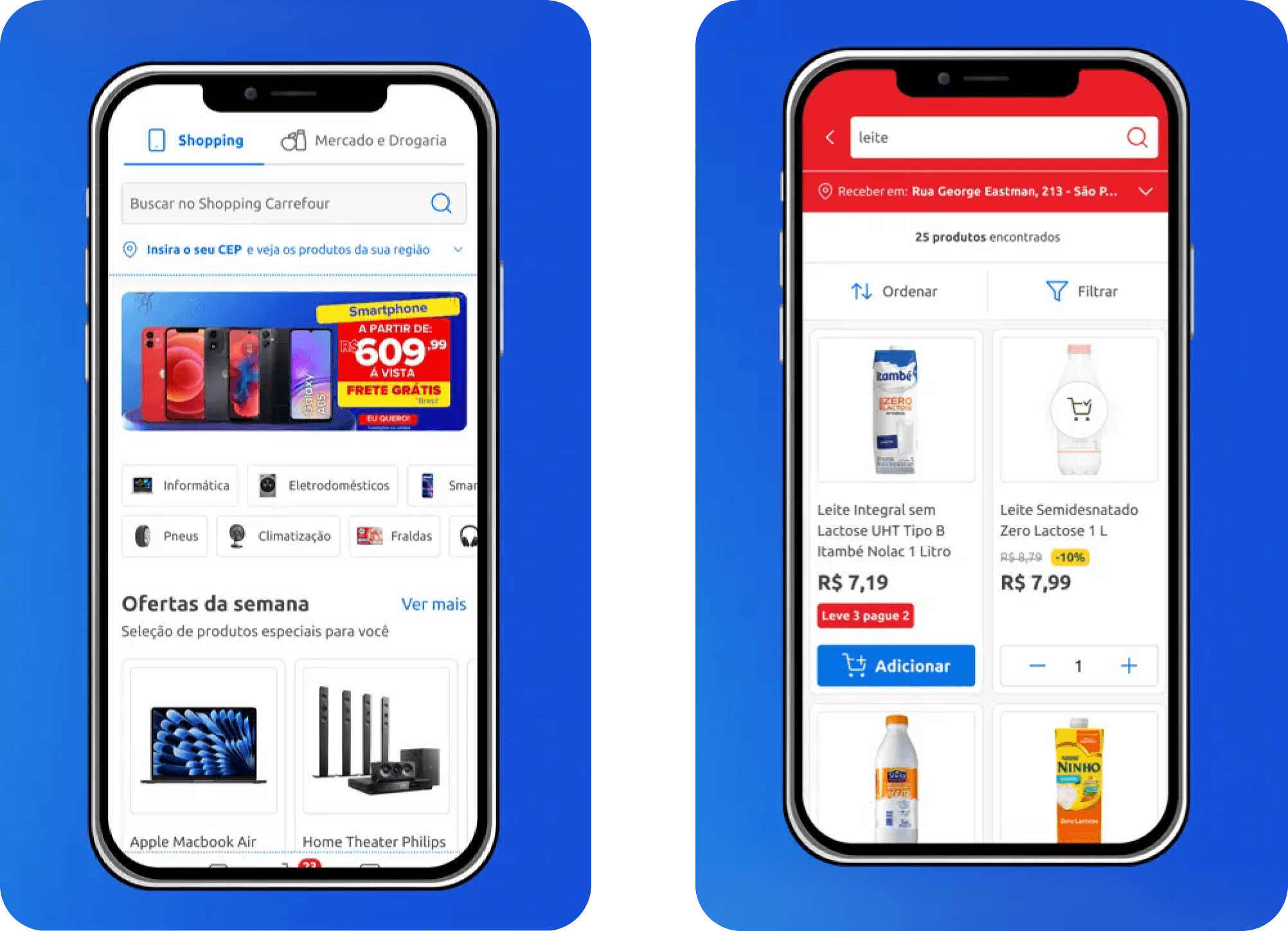
Today, both the Carrefour Brazil app and the Atacadão app consume Marcel's components within this architecture. Sam's Club remains with a partial implementation — a reminder that not every solution scales equally well for all brands, and that's okay.